Phase 2: Implementation

Scaling proven solution to improve air quality in classrooms

Phase 1 confirmed two things: the challenge is widespread, and practical solutions are available. Phase 2 focuses on immediate, scalable action to improve classroom air quality—starting now, and designed to deliver impact quickly across the education system.

The scale of the need in Belgium

This is not a niche issue. Belgium has 2.1 million students across kindergarten, primary, and secondary education, spread across thousands of schools and tens of thousands of classrooms. Phase 1 results indicate the problem is structural.

2

million students

87,500

classrooms nationwide

84%

of schools show poor indoor air quality against reference recommendations

A simple route to immediate improvement

Air purifiers don’t replace good ventilation. But they can reduce fine particle exposure quickly where infrastructure is limited, upgrades are slow, or classrooms face outdoor particle pollution. This makes them a practical, deployable option for rapid improvement.
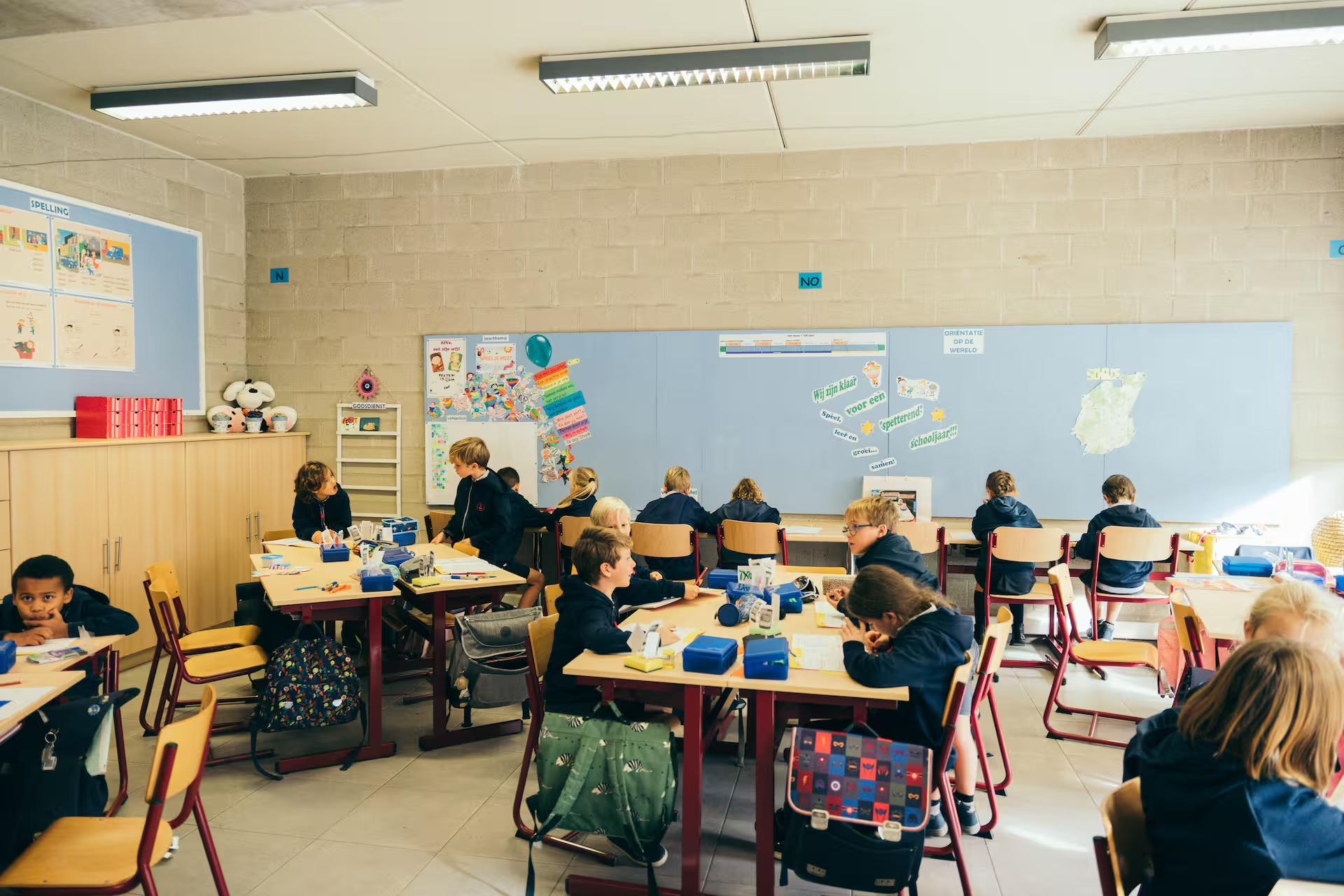
  • Immediate impact without waiting for major renovations

  • Focus on classrooms with the highest exposure or the strongest constraints

Costings

Clear, proportionate, scalable

A national-scale rollout is estimated at 73,500 classrooms equipped with air purifiers, at roughly €500 per unit. That places the total at €29.4 million to help guarantee good air quality across education—at a cost comparable to 2 to 4 school renovations, but with faster and broader reach.

Starting immediately

Phase 2 begins now as an impact project led by Airscan and the Positive Impact Team. The aim is simple: convert measured insight into real-world improvement, classroom by classroom.