Phase 1 Update: analysis
84% of monitored schools recorded poor indoor air quality
Launched in 2020 by Airscan in collaboration with Belfius, Clean Air for Schools measured CO₂, fine particles (PM2.5) and VOCs in classrooms over multi-month campaigns. The results show that many children are still learning in air that fails basic health guidance.
The project in brief
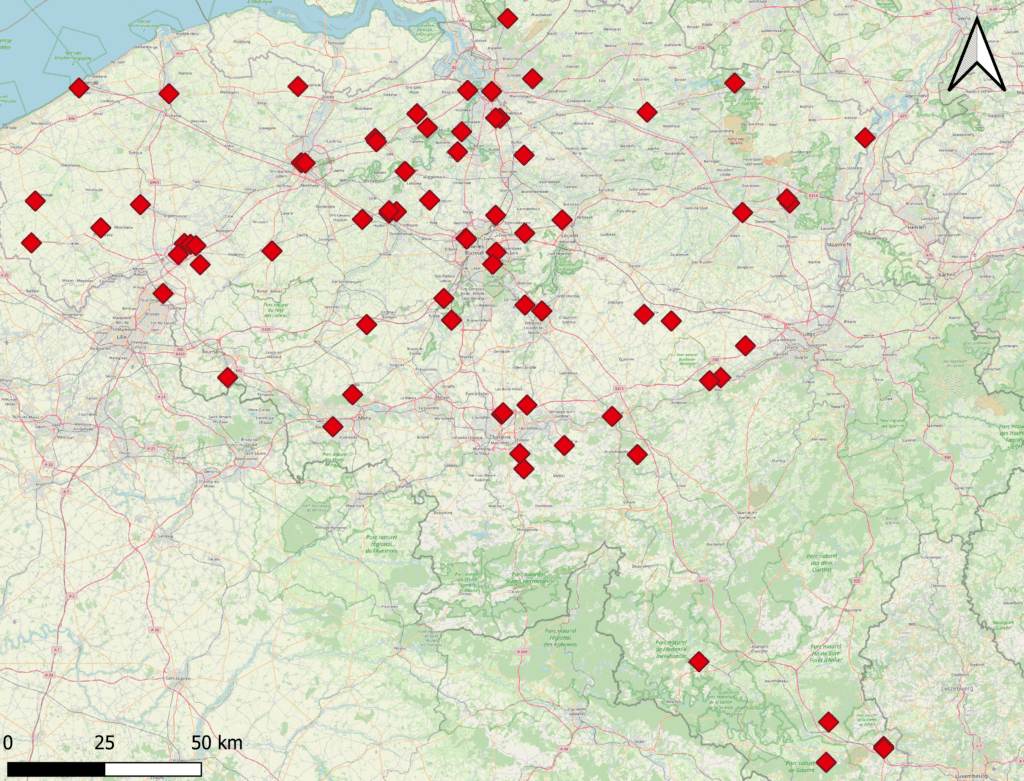
Phase 1 ran as a multi-year programme across Belgian schools, with monitoring campaigns designed to capture representative classroom conditions. Schools received structured diagnostics and practical recommendations, supported by ongoing feedback during the campaign.
72
schools equipped and monitored
6
months of measurements per school
5,670
children benefited from monitoring and improvements
What we measured and how
Phase 1 focused on three common indoor pollutants that affect health and learning: carbon dioxide (CO₂), fine particulate matter (PM2.5), and volatile organic compounds (VOCs). Sensors were installed in multiple classrooms per school, followed by an initial diagnosis and a final check after the improvement period.
Indoor sensors installed across classrooms
Initial diagnosis, then follow-up assessment after 6 months
Key findings
Indoor air quality is often poor across schools
Phase 1 focused on three common indoor pollutants that affect health and learning: carbon dioxide (CO₂), fine particulate matter (PM2.5), and volatile organic compounds (VOCs). Sensors were installed in multiple classrooms per school, followed by an initial diagnosis and a final check after the improvement period.
84% of schools showed poor indoor air quality against reference recommendations
Fine particles (PM2.5) emerged as the biggest concern
Engagement and real-time support
13,737 alerts sent to teachers to flag pollution peaks
Practical tips shared on ventilation habits, room use, and everyday routines
What worked
Ventilation, plus targeted air purification
-
Ventilation improves outcomes, but has limits in real-world school buildings
-
Air purifiers can be an effective, budget-friendly option where needed
What's Next?
Large-scale improvement
Phase 1 produced a clear baseline, showed which actions improve conditions in practice, and confirmed that solutions exist. The next step is to move from diagnosis and pilots to implementation.